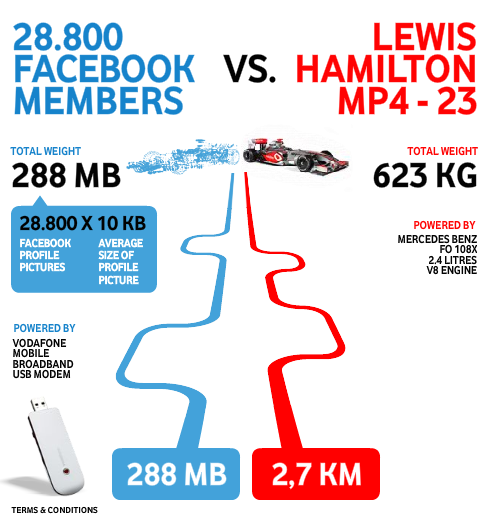
Vodafone is challenging F1 champion Lewis Hamilton, to race against the speed of it's improved mobile data network in The Netherlands. To make it an actual challenge, Vodafone calls for 28.800 Facebook users to join the race in a virtual car on Facebook. The time it takes Vodafone's network to download all of their profile pics, is the time to beat for Hamilton. The actual race will take place on a secret track - Schiphol is rumored - on the 13th of september. The race will be aired live on Facebook.
Using digital media is a good way of reliving historic events from the past. Last year it was all about the 40th anniversary of the first lunar landing, with outstanding projects such as We chose the moon.
But last year it was also the 20th anniversary of the fall of the Berlin Wall, and that is how it was created the Go Beyond Borders Project, an initiative of Heimat Berlin and CNN International in conjunction with Berlin Tape Artist El Bocho.
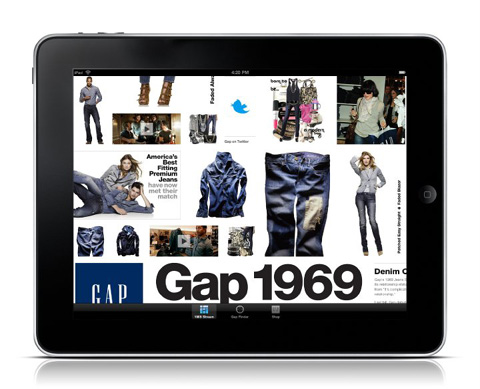
As a consumer based in Europe (and partly as a digital marketer), I never thought Gap was a cool brand. But now, a few days after the iPad has been launched, I definitely changed my mind.
The Gap 1969 Stream iPad app is so much of the moment! It's an iPad application that allows you to browse a lot of (branded) denim content, celebrities and designers videos as well as music. And on top of this, looks like you can also purchase products directly from the application. Once again, the geek marketer in me claims an iPad as soon as possible. But I guess I will have to wait until end of April to get one in Italy.
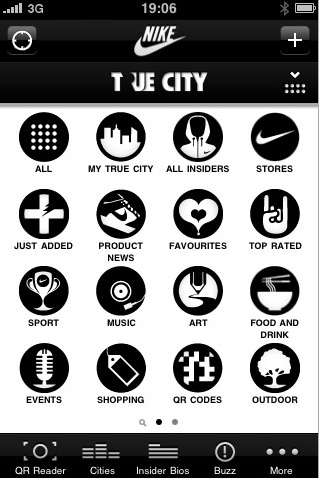
Nike True City is a really cool iPhone app where you can find some info about different european cities, provided by some "Nike experts", but leaving it open for you to update the content with your own suggestions of what a "true city" should be.
Aditionally the app reveals where new Nike events are taking place, where there are secret QR-codes in each city (i love they include even a QR-Code reader inside the application) or even new Nike products to be launched, creating a really interesting community where you can be rewarded on your own or by sharing to the rest of users. Here's a little trailer to the app:
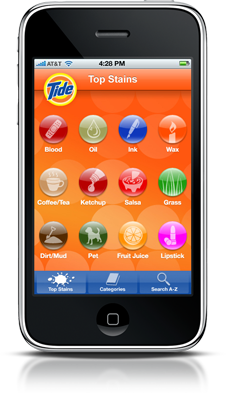
Branded iPhone applications need one characteristic to be successful and appreciated by consumers: they need to be useful and, possibly, worth talking about to friends. I was quite doubtful when I received an email from Tide PR people promoting "The Tide Stain Brain". But I was wrong, the insight the used and the service they want to provide is pretty good: a guide to stain removal, an application that helps consumers finding and sharing solutions for stains.
If you don't have an iPhone you can still check out the online version of the app, not as since, but probably as useful.
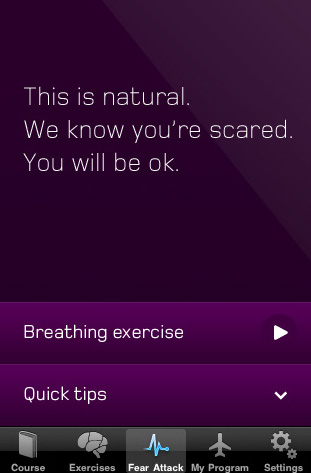
Virgin Atlantic has just released an iPhone application to help flyers who don't like flying. The application presents the pretty well known "Flying without fear course" aimed at anxious flyers. It features a video explanation of the flight process, frequently asked questions, relaxation exercises and a fear attack button for emergencies with breathing exercises.
I find the app idea very nice and perfectly in line with the brand and the service you would expect from an airline company. However I'm doubtful about the fact of making consumers pay for this (€3.99) and I'm a bit disappointed by the visuals which look dull. Both aspects are rather unexpected from a pretty cool brand like Virgin and, while I can somehow understand the idea of paying for a value added service, I really don't get why they didn't dare a bit with the layouts.
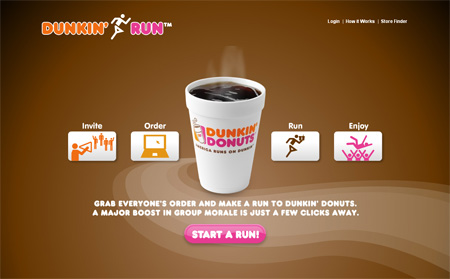
In this new era of applications, Dunkin' Donuts released a really cool one called "Dunkin' Run". Probably you know how complicated is ordering coffe for a group of people in an organized way. Using this app, you can become a "runner" while they fill what they want and then get yours and your friend's goods from the general Dunkin' Donuts menu, you can see a little video explaining how it works.
What appears interesting to me (besides the obvious use) is the way in which the application spreads, not only by using or because someone recommended, but also by ordering something when a friend of yours is the runner and asks you if you want him to pick some coffee for you.
It really took so long having an app to configure and order your pizza from a mobile phone, which is kind of weird because in the US you even can order a pizza from TiVo. But last week, Pizza Hut launched this fantastic app developed by IMC2 in which you can also play games while you wait for the pizza to arrive:
As a suggestion, wouldn't be funny (and useful) that we could track where the pizza is through one of these maps applications too?
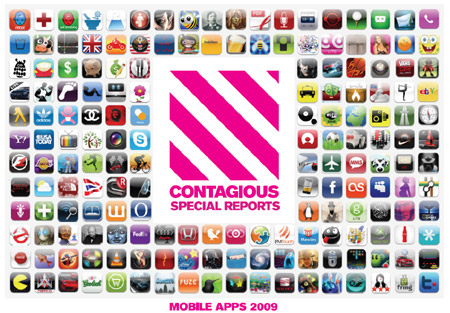
Recently, the guys at Contagious, sent me a complimentary copy of their latest report dedicated to Mobile Applications in 2009. Having developed an iPhone application myself (see Nike Goal post) I'm extremely interested in the topic and I have to say this report offers good food for thought, both for beginners and more "mature" marketers. I like it because it features the right balance of numbers, tips for brands, consumer insights and ideas' review which, in my opinion, represent the ideal mix to inspire new projects.
As you might remember, BMW already played with 3D animation. Well, it seems that when the German automotive company gets into innovative projects, they never do things by halves.
In UK, they 've adapted their "Expression of Joy" campaign on many supports and technologies. One to notice is the Augmented Reality application :
You can start the experience here.
I admit they are not the first brand to use AR, but in my point of view the all campaign remains consistent, especially regarding the positioning of the product, and shows a nice execution.
Note that the BMW group already used this technology in Germany for their Mini brand. They have also explored this field for some years now, in a very interesting industrial and service perspective.
Marta Kagan recently put online a useful presentation on branded applications for the iPhone, considered as the next generation of immersive mobile branding. Her slideshow gives me the opportunity to spend a couple of words on the huge contradictions I see on App Store if you take the digital marketer point of view.
We are talking so much about the digital world, where everything and everybody is connected, where you can discover and get to know great ideas and great people from all around the world, global meets local etc, etc, etc... But, but, but the Apple App Store is far from being a global store. If you are based in Italy for example, very often you can't buy nor even download for the applications developed in the US, and viceversa.
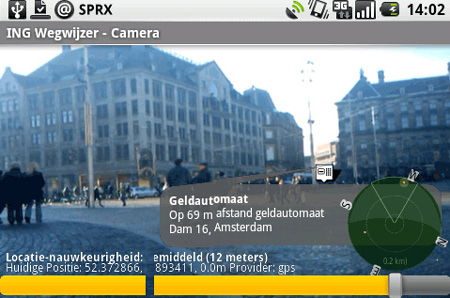
I'm extremely interested in branded mobile applications. As you might have read some weeks ago, with Nike Italy I have recently launched a football related app called Nike Goal, so my eyes are wide open to look for ideas and inspirations to further explore the iPhone (and now also the G1) world in order to deliver value and great consumer experiences through the device. This said, let's have a look at the ING Wegweijzer application, I've discovered today on Springwise. Launched by the Dutch bank ING, the application for the T-Mobile G1 (Google phone) helps users to find not only the closest ATM machine, but also tells them how to get there and, most of all, in which direction to move the first step to reach it.
The application uses the G1’s GPS and digital compass to provide you with directions to the nearest bank machine. It's a great example of augmented reality, since ING Wegweijzer is capable to overlay directions onto real-time views of the surrounding area.