Digital advertising and marketing: only the best ideas worldwide, since 2003
Tag archives: google
Google Music launches in US
Google Music has just launched, but unfortunately only into the cloud above US territory. The service can host up to 20,000 of your songs for free and - similar to other music stores like iTunes - lets you discover and purchase new tracks. This snazzy micro site explains Google Music’s features. Read more…
Data Visualisation. Which language do you browse?
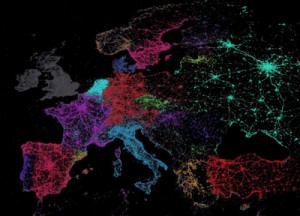
Google Chrome’s translate feature allowed cartographer Eric Fisher to read the language used by the browser. Combining this information with Twitter’s API he created a beautiful global map of languages, emulating countries’ shapes, while at the same time showing how they fuse together at their borders.
Google+ Interesting Facts
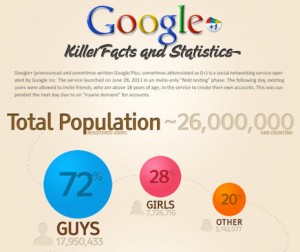
I was really excited about Google+ arriving and then, well, nothing happened. This infographic does supply some thoughts on what’s happening on the platform. Amazing that 72% of users are male, and the top ten occupations of users are pretty much geeks. The funny thing is that 72% + 28% + 20% = 120%. Hmmm… haha. Take a look… Read more…
Four nice (not so little) new projects by Google
I admit it, I wasn’t super impressed by the launch of the Google+ project. But I am impressed by a series of smaller projects that, in my opinion, either have more potential to be practically useful for our business and/or ourr life or, simply, are more fun. As usual, it’s great yet scary to see Google being so active in any sphere of our online life…
If Social Sites Were Superheroes [infographic]
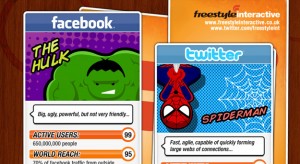
Ever wondered how your favorite social networks compare to your favorite comic book heroes? Read more…
Social media propaganda

Fantastic work by Aaron Wood who created a series of WWII propaganda style posters inspired to Twitter, Google+ and Facebook.
OK Go: All is not Lost

Google, OK Go and director Trish Sie have teamed up to create a spandex-heavy video clip for “All Is Not Lost”, the 7th single off their 2010 album “Of the Blue Colour of the Sky”.
If you fancy your own message to appear in the video, head over to All Is Not Lo.st It is only accessible through the Chrome browser, as part of Google’s strategy of exclusive web experiences. Using HTML5’s canvas technology you can marvel at browser windows resizing and milling about.
Introducing Google Rent
This is so obvious, so simple (and so damn brilliant) that we really wonder if Google isn’t actually working on a project like the Google Rent idea by Gabriel Kolisch and Isabella Pipitone. Think about it. First of all, when you need a place to rent or buy, the most used verb to define your action is “search” (yes, better, I know “look for”, but that doesn’t help the joke
The Lady Gaga digital domination

Starbucks and Lady Gaga. Amazon and Lady Gaga. Google and Lady Gaga. Farmville and Lady Gaga. Twitter and Lady Gaga. She’s everywhere. She’s a master of online branding across all platforms. In case you missed something, let’s try to recap, even if I don’t even know where to start. Ok, let’s begin with the easy ones… 1. She recently reached 10 millions followers on Twitter. A new record ever. 2. Yesterday she decided to sell her new album for one day on Amazon for $1.99, granting a boost of visibility to Amazon’s cloud service that eventually collapsed (best promo ever…)!
Weetabix powers Google’s librarian
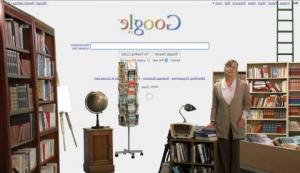
Did you know that behind Google there is an old, fast and wise librarian? See it yourself at www.insideyoursearch.com. Of course she’s fast and effective because she eats Weetabix…
I can’t help having contrasting feelings about this campaign. At first I found it smart and simple, but now I’m not sure about the idea of relying on another brand popularity to sell another brand. I find it kind of weak and surely applyable to more brands than just Weetabix. The agency is WCRS.




Popular posts
Tags
adidas advergame advergames advertainment advertising ambient marketing australia belgium best brazil coca-cola email marketing facebook fashion france germany google heineken ikea infographic italy japan marketing mobile content mobile marketing msn nike nokia online ads online advertising online campaign online marketing print advertising rich media samsung sms spain sweden tvc twitter uk video of the day viral marketing volkswagen wieden + kennedy